I'm a strategic product designer approaching problems with first principles and a focus on measurable impact.
Currently at Warner Bros. Discovery, designing growth experiences for the HBO Max brand across global markets.

Radically Simple Sign In
Most HBO Max sign-ins occur on TVs, but 1 in 4 users were failing to complete the flow. We'd outgrown an auth experience built for a simpler product before global expansion, the complexity of 40+ languages, and evolving auth methods.
I led a design-initiated overhaul from building the business case through execution, rebuilding our TV sign-in experience for scale and future flexibility.
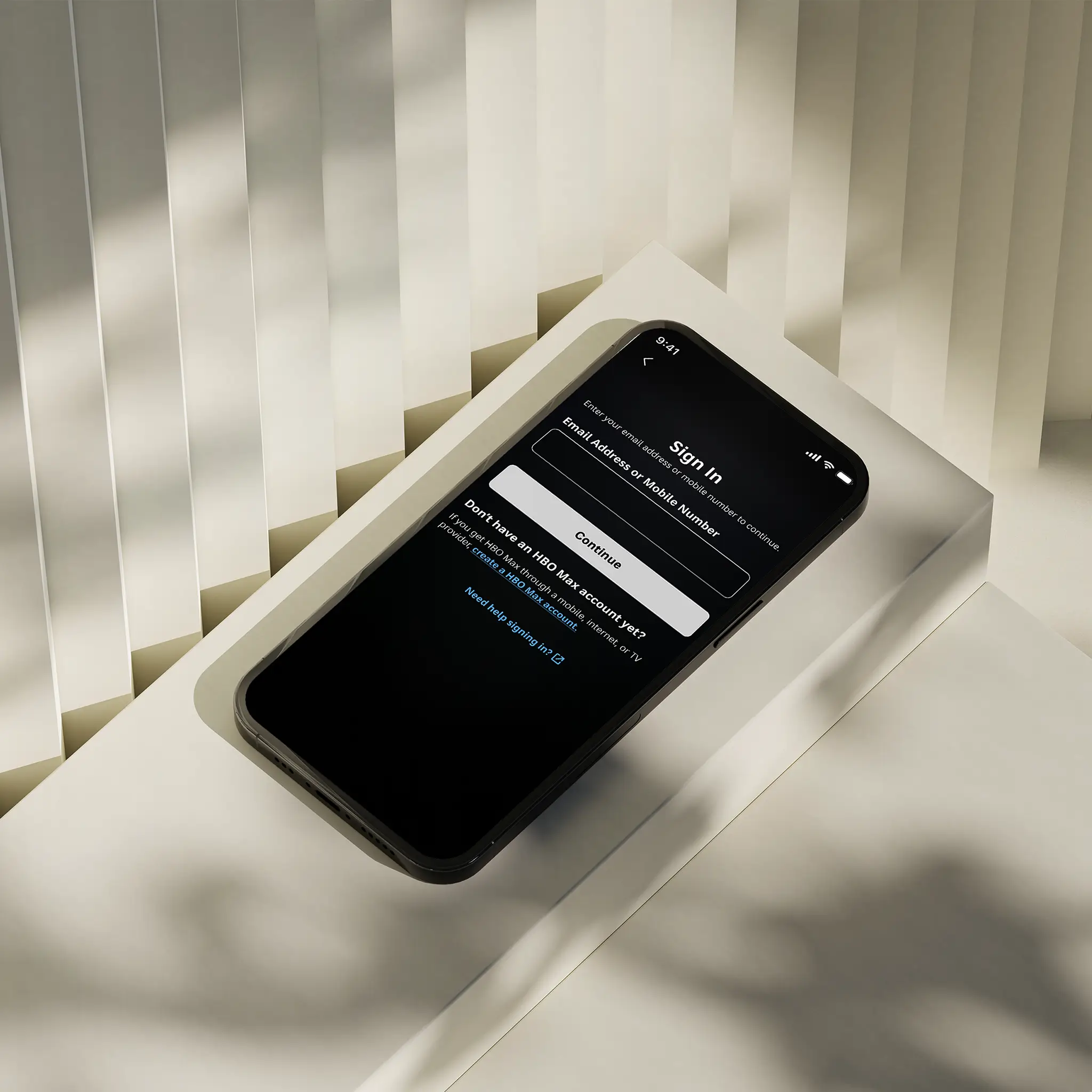
Routing HBO Max Users to the Right Experience
Sign-in success was stuck at 75%—not because of bad UI, but because we treated every user the same. Partnered with Product to design context-aware routing that increased success to 88%, then scaled from US web to all platforms and global markets.
Bally Sports (now FanDuel)
How do you explain complex regional broadcast restrictions to passionate sports fans who just want to watch their team?
I contributed to redesigning how users discover available content for the largest regional sports network in the US—turning contractual constraints into clearer expectations based on their location.
I design for delight and outcomes.
I'm an interdisciplinary maker who sees the whole system. Most designers think in screens. I think in narrative arcs, motion, temporal experiences—the full journey a user takes, not just individual touchpoints. That perspective lets me spot strategic opportunities others miss and push for solutions that feel coherent across platforms and moments.
My background is unconventional. Before product design, I spent over a decade as a department head on film and TV productions—HBO, Netflix, Amazon Prime, A24—managing chaos, building consensus among strong personalities, and delivering work under tough constraints. That world taught me to navigate complexity, coordinate across disciplines, and make smart calls when the perfect solution doesn't exist.
Outside of work, I explore where tech and the arts converge, read avidly, plan where to travel next, and collect too much vinyl.
I design for delight and outcomes.
I'm an interdisciplinary maker who sees the whole system. Most designers think in screens. I think in narrative arcs, motion, temporal experiences—the full journey a user takes, not just individual touchpoints. That perspective lets me spot strategic opportunities others miss and push for solutions that feel coherent across platforms and moments.
My background is unconventional. Before product design, I spent over a decade as a department head on film and TV productions—HBO, Netflix, Amazon Prime, A24—managing chaos, building consensus among strong personalities, and delivering work under tough constraints. That world taught me to navigate complexity, coordinate across disciplines, and make smart calls when the perfect solution doesn't exist.
Outside of work, I explore where tech and the arts converge, read avidly, plan where to travel next, and collect too much vinyl.
I think like a strategist, even as an IC.
Most designers wait for a brief. I start with questions: What problem are we really solving? What's the hypothesis? What does success look like—not just for users, but for the business?
I bring that same rigor to everything I touch—turning ambiguity into clarity, hypotheses into measurable outcomes.
I connect design decisions to business outcomes.
Good design isn't just "users love it"—it's design that moves the business forward.
I know how to operate in product-led organizations where design is still earning influence—managing up and down, aligning stakeholders, and initiating design-led work without explicit mandate.
I speak product and engineering fluently, understand unit economics and funnel optimization, and frame decisions in terms of trade-offs and opportunity costs.
I reimagine what's possible.
Working across different industries and business models trained me to question assumptions and look for transferable solutions.
I adapt quickly to new contexts because I'm not attached to "how we've always done it."
I spot assumptions insiders might miss, learn the language and constraints fast, and find patterns that transfer across seemingly different problems.
I think like a strategist, even as an IC.
Most designers wait for a brief. I start with questions: What problem are we really solving? What's the hypothesis? What does success look like—not just for users, but for the business?
Working on Growth teams taught me this discipline. You're weighing acquisition against retention, quick wins against foundational work, new features against optimization.
I bring that same rigor to everything I touch—turning ambiguity into clarity, hypotheses into measurable outcomes.
I connect design decisions to business outcomes.
Good design isn't just "users love it"—it's design that moves the business forward.
I know how to operate in product-led organizations where design is still earning influence—managing up and down, aligning stakeholders, and initiating design-led work without explicit mandate.
I speak product and engineering fluently, understand unit economics and funnel optimization, and frame decisions in terms of trade-offs and opportunity costs.
I reimagine what's possible.
Working across different industries and business models trained me to question assumptions and look for transferable solutions.
I adapt quickly to new contexts because I'm not attached to "how we've always done it." I spot assumptions insiders might miss, learn the language and constraints fast, and find patterns that transfer across seemingly different problems.
Organizations hire me for execution. They keep me for the perspective I bring.